

IPS/IDS Firewall
- Product Code: IPS/IDS Firewall 4GB128GHZN100
- Availability: In Stock
$280.00
- Ex Tax: $280.00
Cost-Effective IDS/IPS Firewall
What are the differences between a firewall and an IPS?
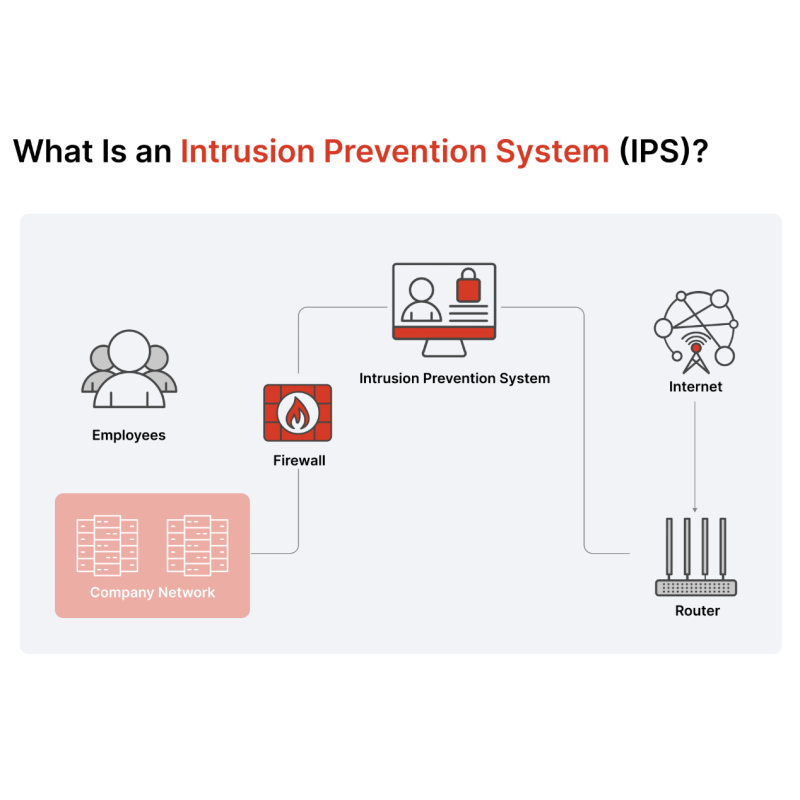
An intrusion prevention system, or IPS, monitors real-time network activity for a deeper examination and identification of possible security concerns. IPS looks for traffic patterns or attack characteristics and when identified, IPS generates alerts and blocks detected attacks.
In contrast, a firewall serves as a barrier to stop unauthorized users from accessing networks by performing actions such as blocking and filtering traffic based on IP Address and Port Number.
IPS can be deployed anywhere, while firewalls are situated on the network perimeter. They both play a key role in cybersecurity strategy.
Why is IPS important?
IPS can detect threats and stop attacks in real time. Historically, IPS/IDS only reacted to cyber breaches, but today IPS is a key component of full network security suites, including threat monitoring, firewalls, intrusion detection, antivirus, antimalware, ransomware prevention, spam detection, and security analytics.
Recent trends in IPS include using AI to automate the detection process. Modern IPS technology extends network perimeter security to the cloud with a multi-layered defense.
Why is IPS important for system security?
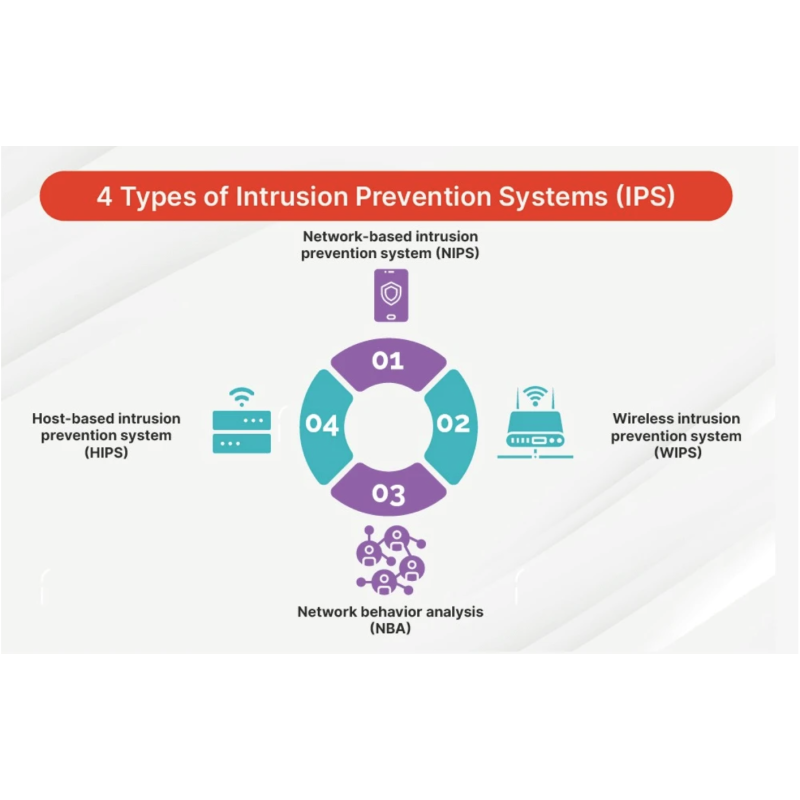
Organizations choose IPS technologies over traditional reactive network security efforts because IPS proactively detects and prevents harm from malicious traffic. IPS protection identifies potential threats by monitoring network traffic in real time by using network behavior analysis.
If an unauthorized attacker gains network access, the IPS identifies the suspicious activity, records the IP address, and launches an automated response to the threat based on rules set up in advance by the network administrator.
IPS is an adaptable safeguard technology for system security
IPS includes anti-virus/anti-malware software, firewall, anti-spoofing software, and network traffic monitoring. Enterprises use IPS to document threats, uncover problems with security policies, and block external or insider security violations.
How Intrusion Prevention Systems (IPS) work?
An IPS security service is typically deployed “in-line” where they sit in the direct communication path between the source and the destination, where it can analyze in real-time all the network traffic flow along that path and take automated preventive action. The IPS can be deployed anywhere in the network but their most common deployments locations are:
- Enterprise Edge, Perimeter
- Hyperscale data center, Enterprise Data Center
- Home and Home Office
An IPS can be deployed as a standalone IPS or the same capability can be turned on in the consolidated IPS function inside a next-generation firewall (NGFW). An IPS uses signatures which can be both vulnerability or exploit specific to identify malicious traffic. Typically, these employ signature-based detection or statistical anomaly-based detection to identify malicious activity.
- Signature-based Detection: It uses uniquely identifiable signatures that are located in exploit code. When exploits are discovered, their signatures go into an increasingly expanding database. Signature-based detection for IPS involves either exploit-facing signatures, which identify the individual exploits themselves, or vulnerability-facing signatures, which identify the vulnerability in the system being targeted for attack. Vulnerability-facing signatures are important for identifying potential exploit variants that haven’t been previously observed, but they also increase the risk of false positive results (benign packets mislabeled as threats).
- Statistical Anomaly-based Detection: This randomly samples network traffic and compares samples to performance level baselines. When samples are identified as being outside the baseline, the IPS triggers an action to prevent a potential attack.
Once the IPS identifies the malicious traffic that can be network exploitable it deploys what is known as a virtual patch for protection. Virtual patch, acts as a safety measure against threats that exploit known and unknown vulnerabilities. It works by implementing layers of security policies and rules that prevent and intercept an exploit from taking network paths to and from a vulnerability, thereby offering coverage against that vulnerability at the network level rather than the host level.
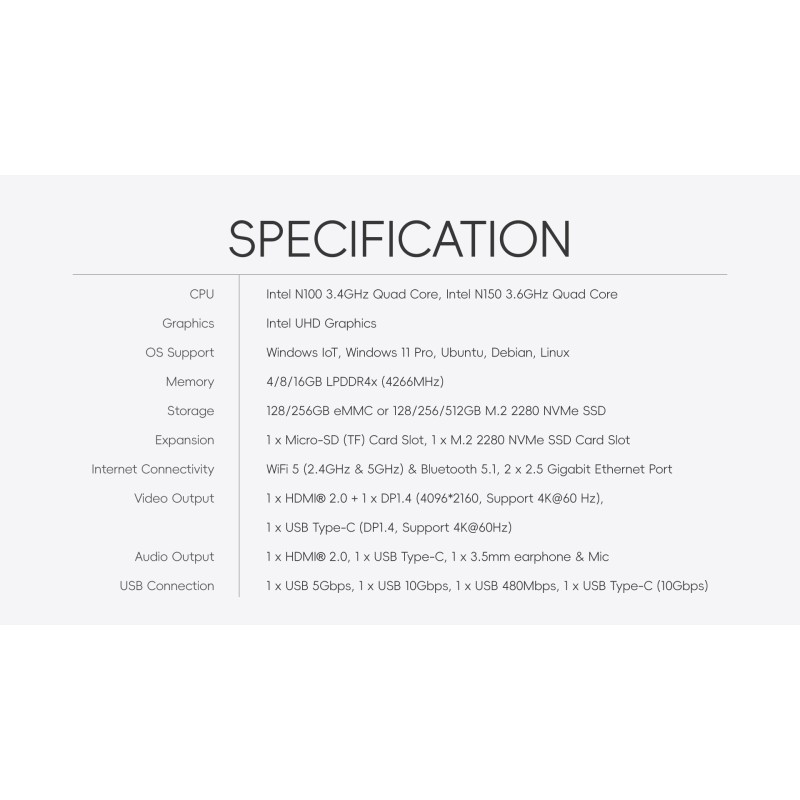
- CPU: Intel Alder Lake-N Processor,Twin Lake Processor
- OS: IPS Firewall
- DDR: LPDDR4X(4266MHz)
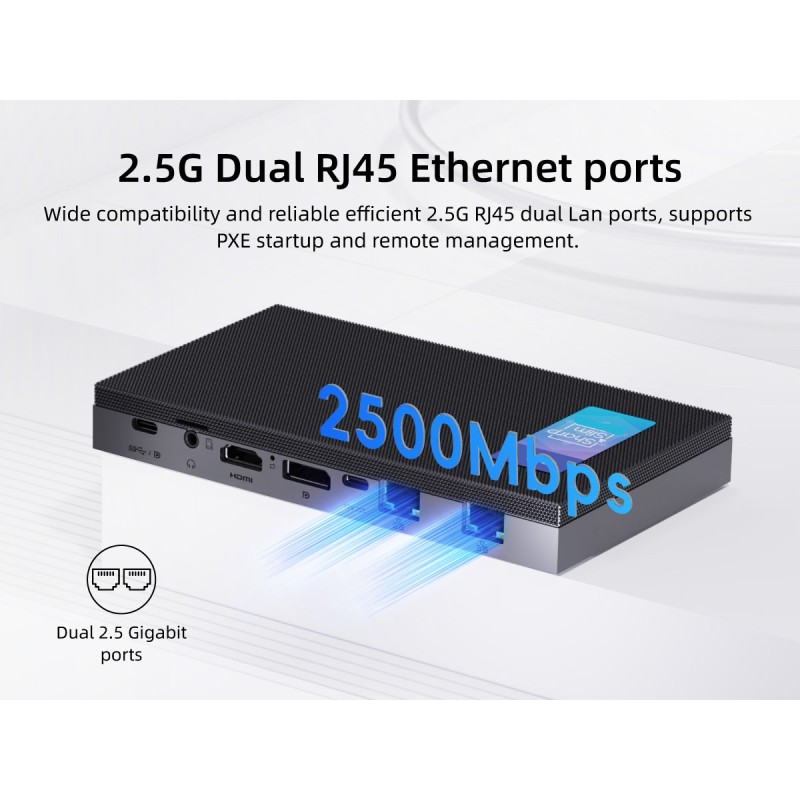
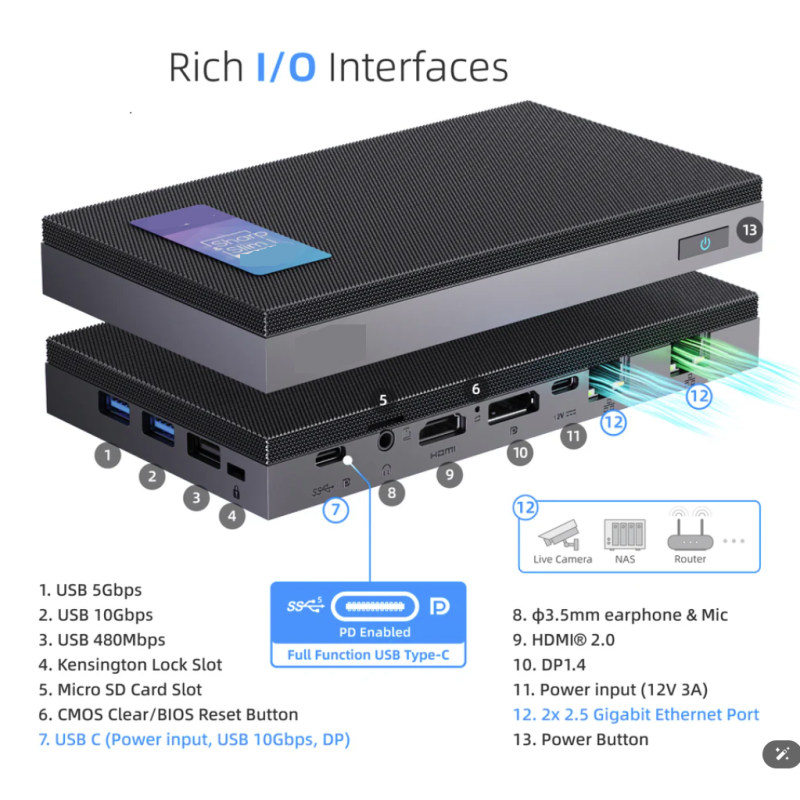
- LAN: 2 × RJ-45 2.5GbE
- Wi-Fi: WiFi 5(2.4GHz&5GHz)
- Bluetooth: BT 5.1
- OUTPUT: HDMI®,USB Type-C(DP1.4),Displayport
- AUDIO: HDMI®, USB Type-C, Displayport,3.5mm Audio Combo Jack
- STORAGE: eMMC or SSD
- LANGUAGE: Muti Language
Tags: IPS/IDS Firewall